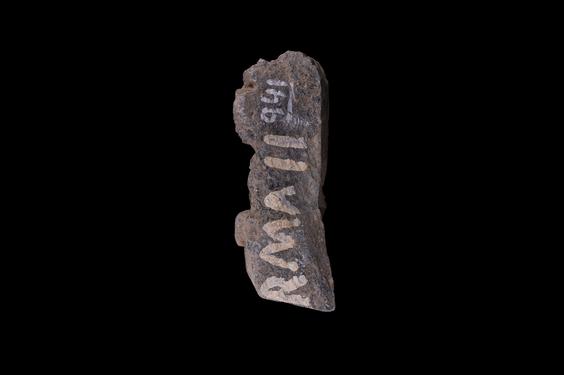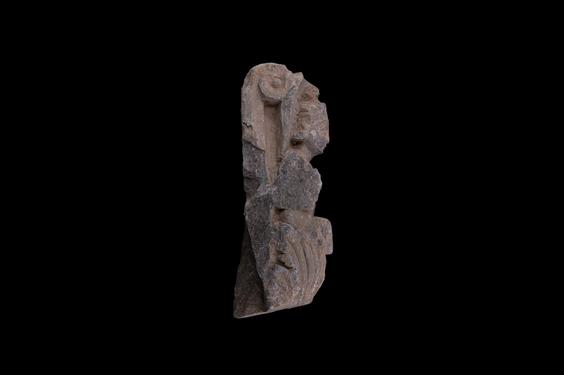
Collection

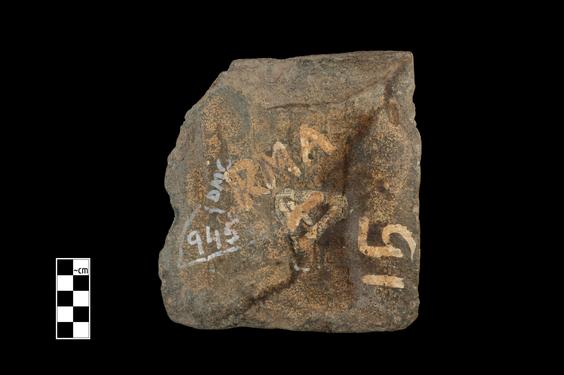
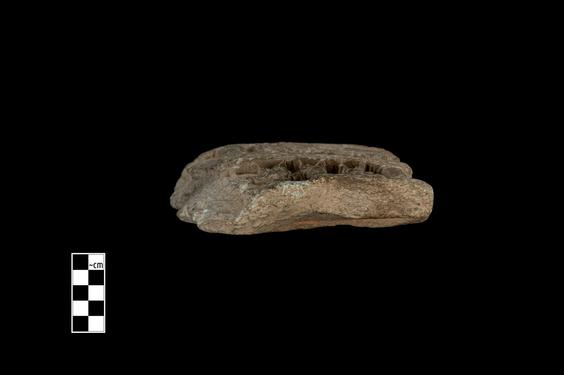
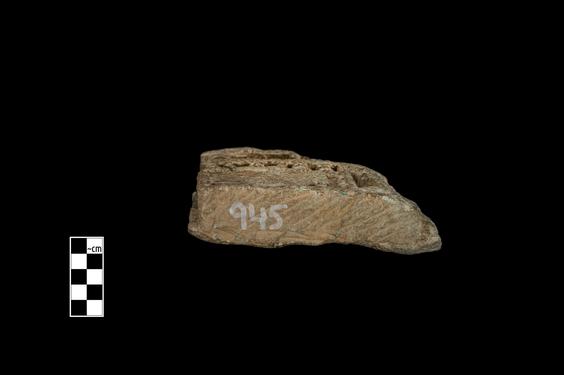
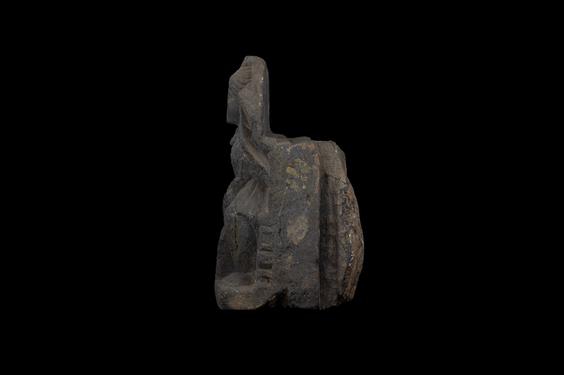
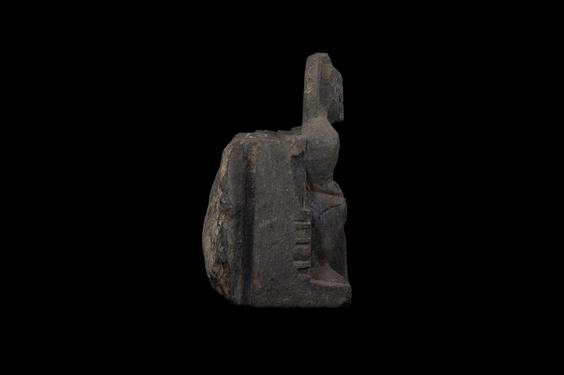
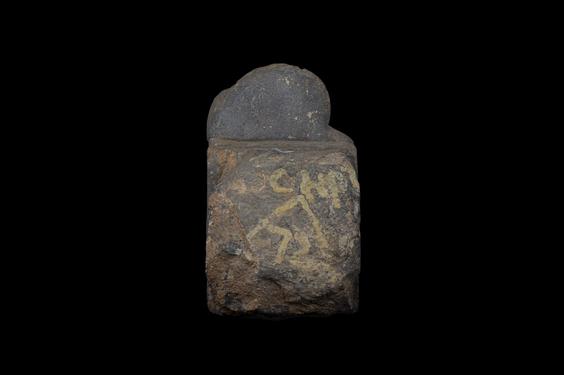
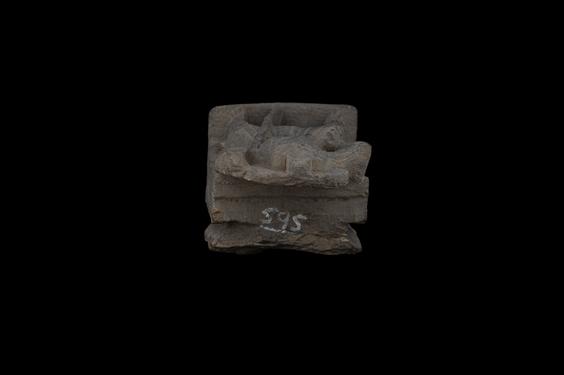
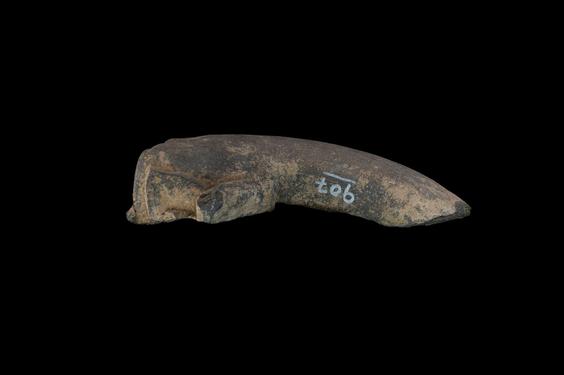
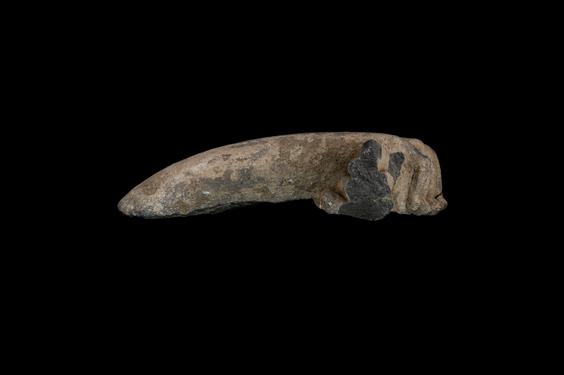
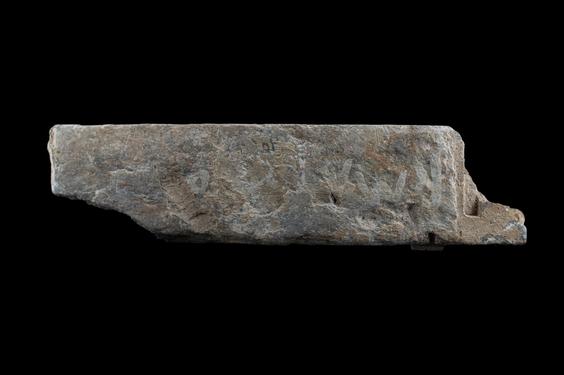
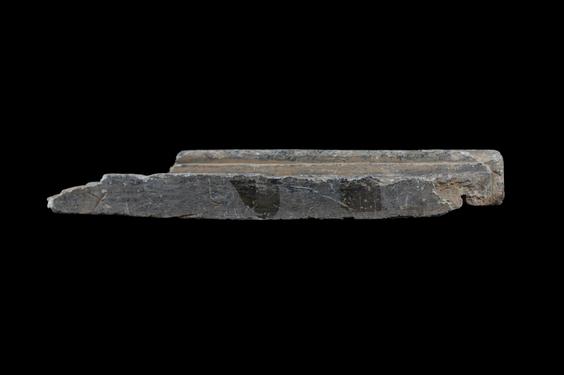
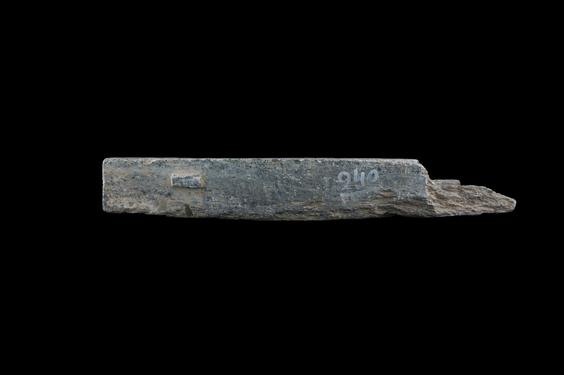
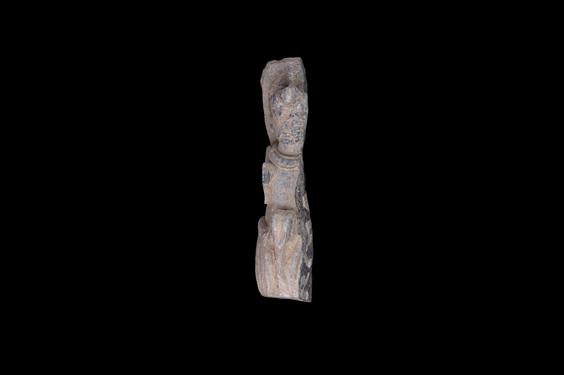
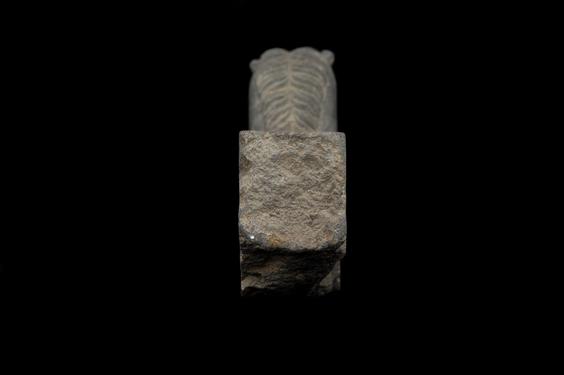
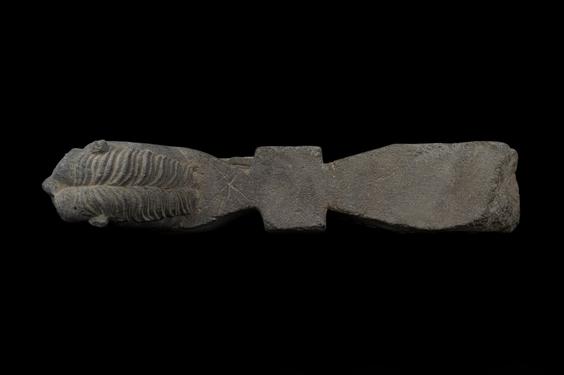
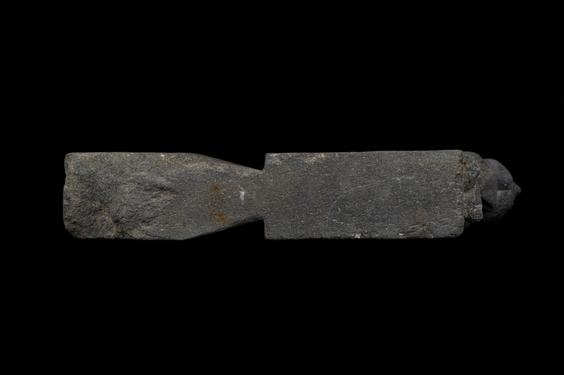
Lion

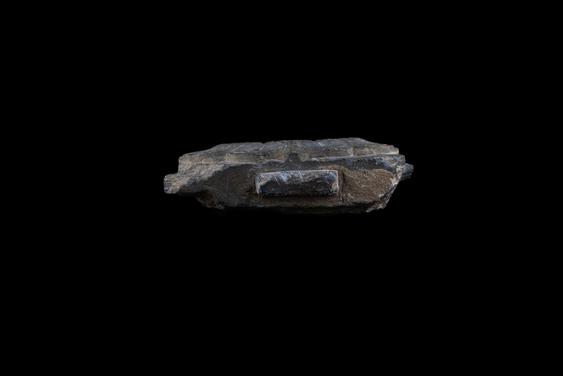
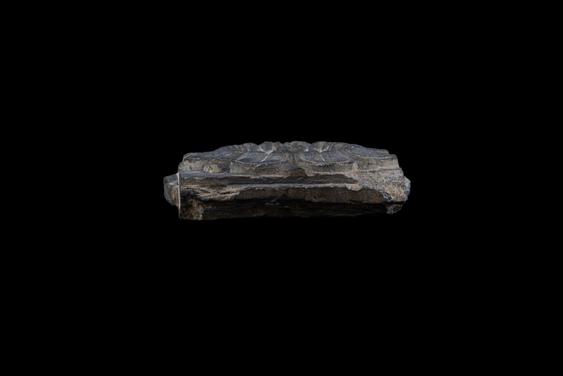
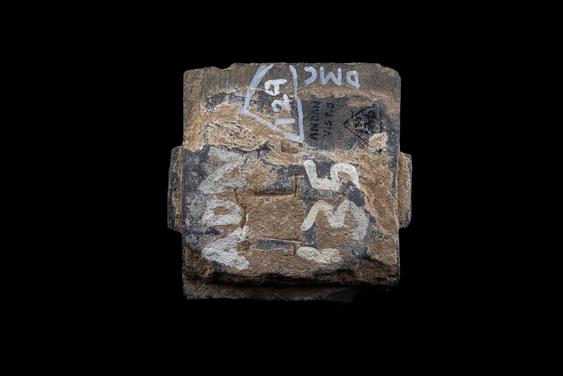
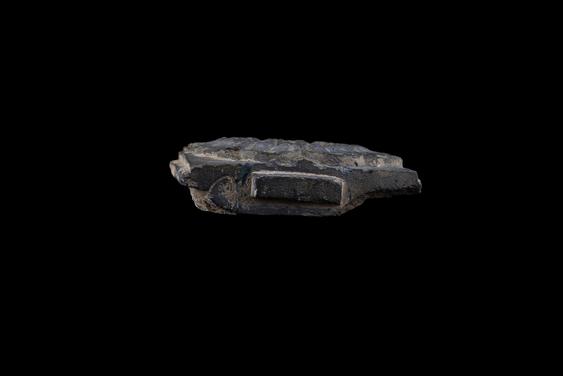
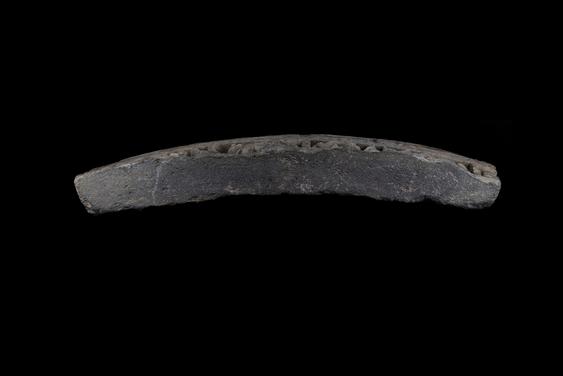
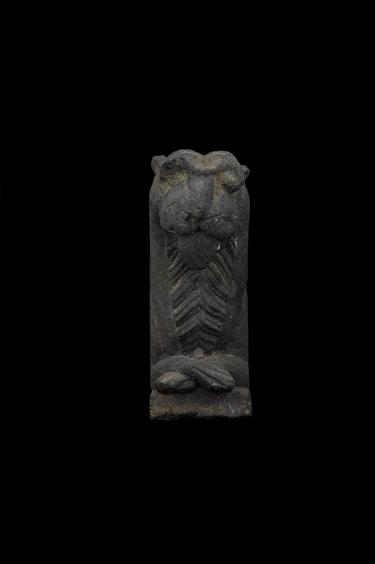
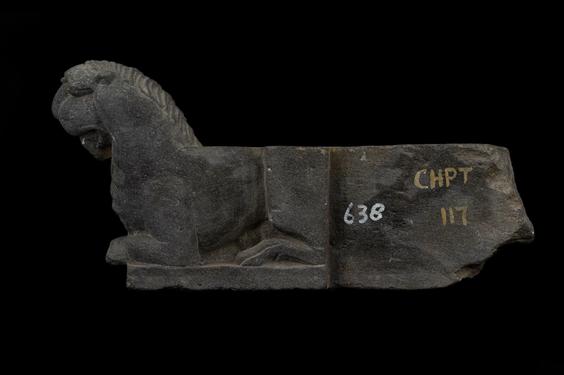
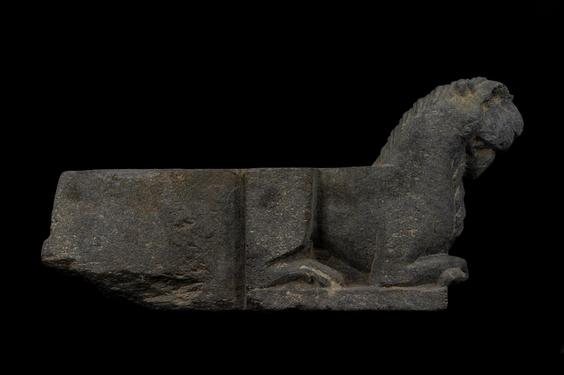
A projecting figured bracket depicting a lion. The figure rests on a plain base. The body of the bracket preserves a vertical socket for wall on both sides and a dovetail tenon. On the bedding surface for superimposed cornice are visible a pair of crossing drawing lines. The lion is …
Change

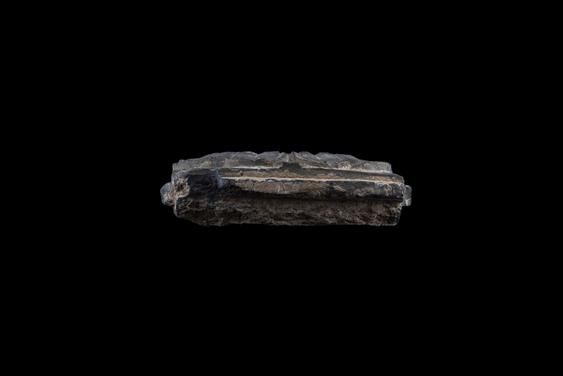
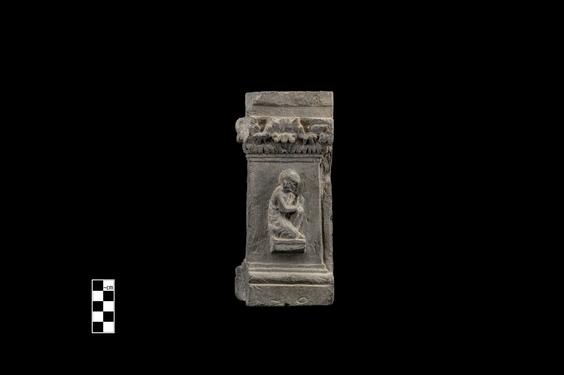
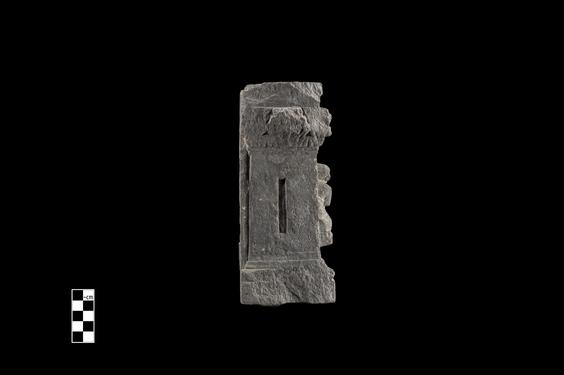
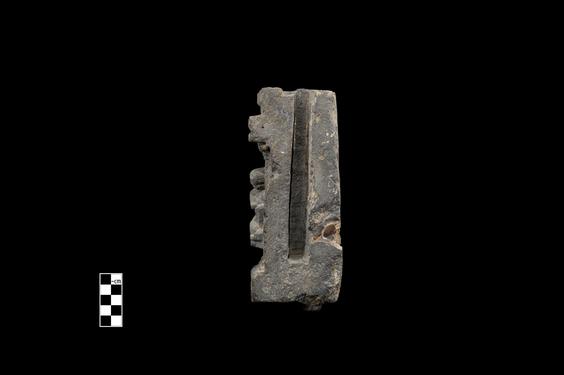
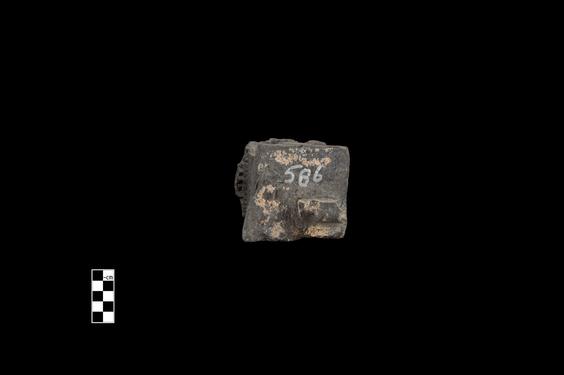
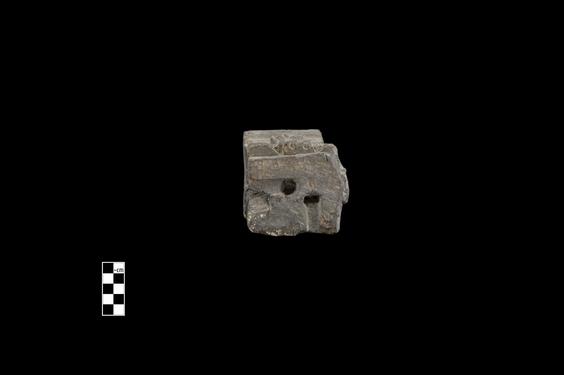
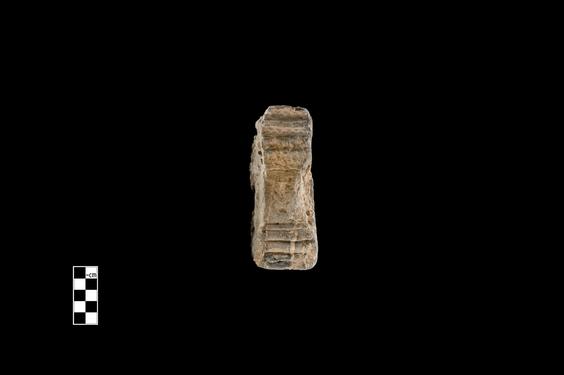
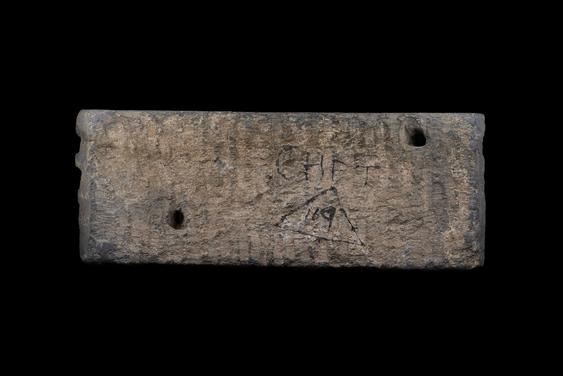
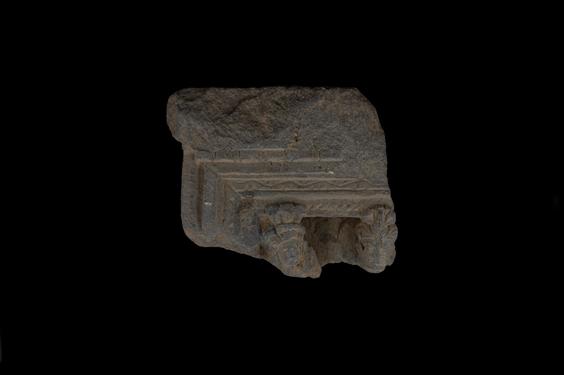
An architectural element showing two corner pilasters, one of which featuring a monk against the shaft. A vertical continuous socket is carved in the left-proper face. The top face preserves a rectangular section tenon. The bottom face shows two rectangular section sockets, one of which with a circular hole. The …

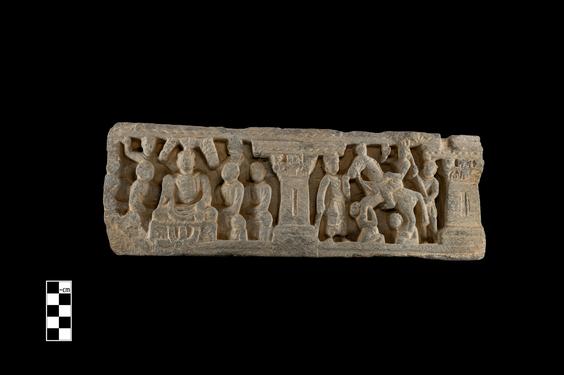
Last Existence: Great Departure, First Sermon

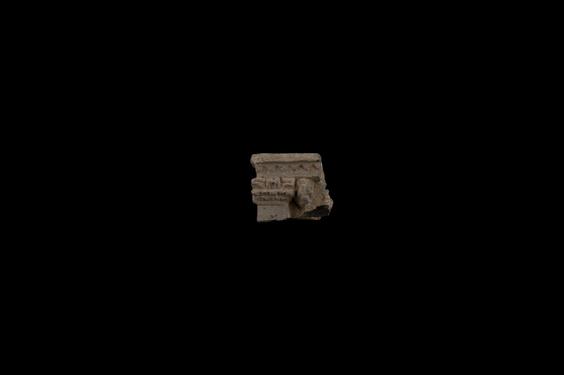
Part of a frieze relief preserving two scenes from the Last Existence of the Buddha. The scenes are separated by a pilaster of the Gandharan-Corinthian type and engaged, with modillion decorated by a projecting fillet above and a row of saw-teeth below; the shaft has a short flute with straight …

Last Existence: Princely Life; female figures

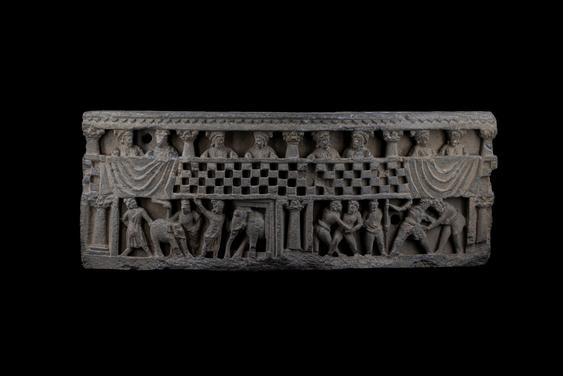
Relief with two superimposed registers, the lower depicting two scenes from the Princely Life, the upper showing a row of female busts. The two registers are separated by a chequered grid with alternating relief squares; a drape is carved on both extremities. The scenes on the lower registers are separated …

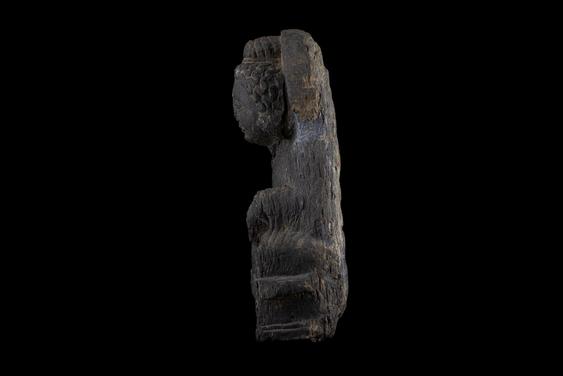
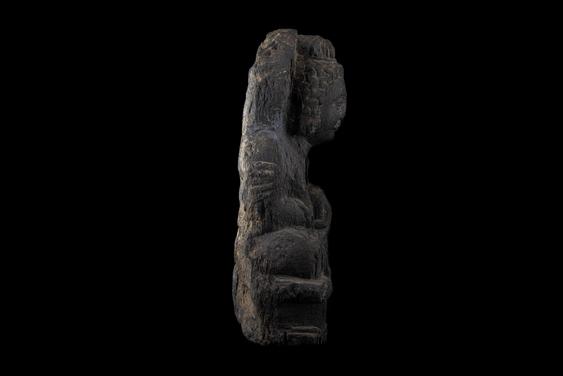
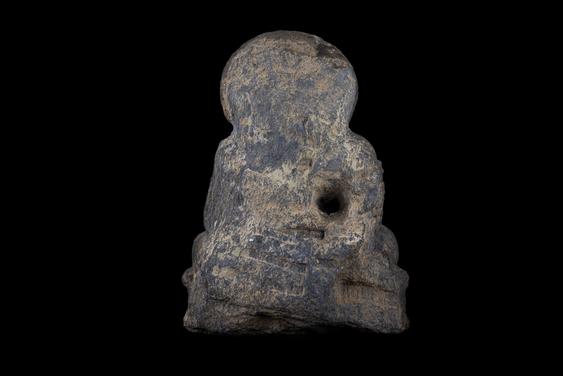
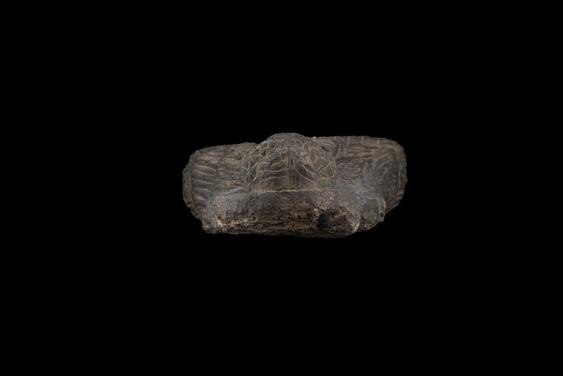
Maitreya

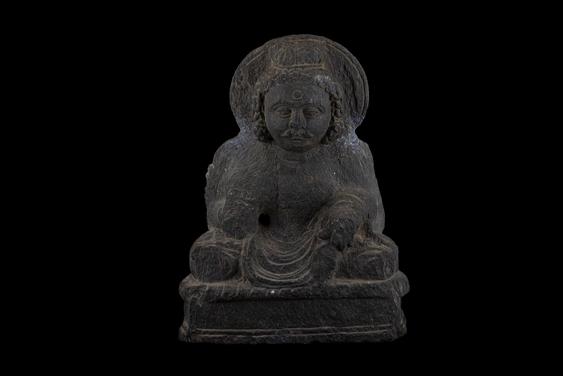
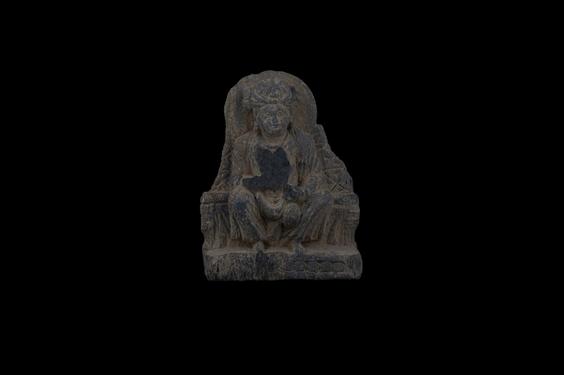
A stele statue depicting Maitreya. A circular nail hole is drilled by the left-proper side of the figure. Diagonal marks of chisel are visible on the lower part of the back face. Maitreya is sitting in padmāsana on a throne with cushion. The throne features a plain body, its base …

Last Existence: Princely Life

Part of a frieze relief with two separated scenes from the Princely Life. The scenes are separated by a framed semi-column of the Gandharan-Corinthian type. The base is plain, the cornice consists of two plain listels framing a scroll of calices alternating vertical and reverse. A circular nail hole is …
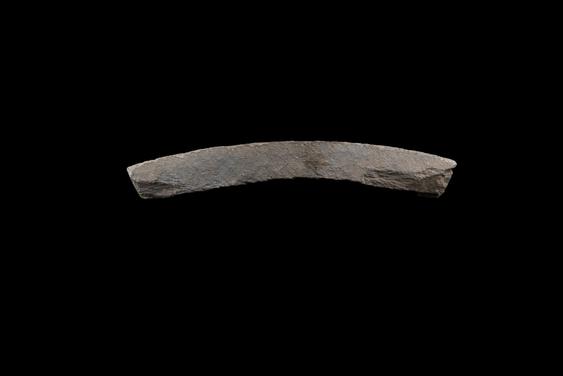
Last Existence: The Gods entreat the Buddha to preach

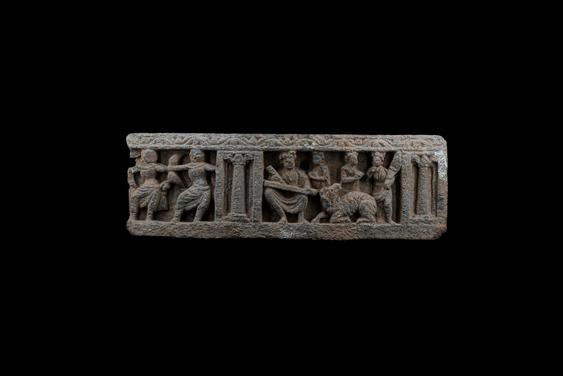
A frieze relief depicting the moment when the Gods entreat the Buddha to preach. In some accounts, the Buddha is reluctant to teach the dharma soon after attaining the Enlightenment. The gods Brahmā and Indra urge the Buddha to overcome his hesitation, persuading him to deliver his teachings. The base …

Buddhas

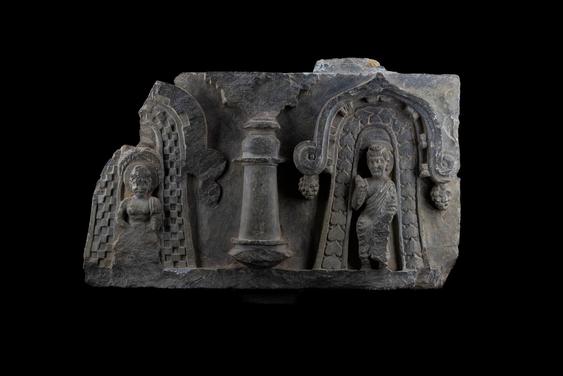
Part of a relief depicting two buddhas each inside a city door. The figures are separated by a semi-column of the Gandharan-Persepolitan type with a bell-like capital and a modillion. The base was possibly plain. A rectangular section tenon is carved at the centre of the lower face and on …

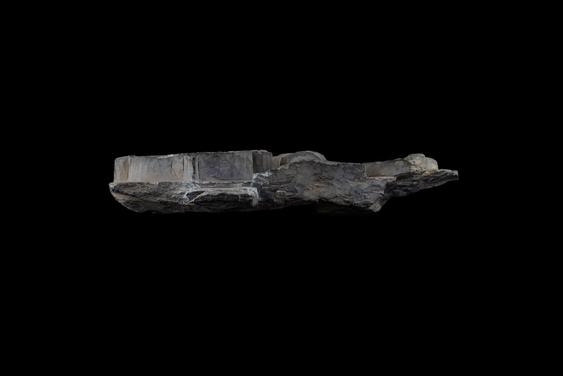
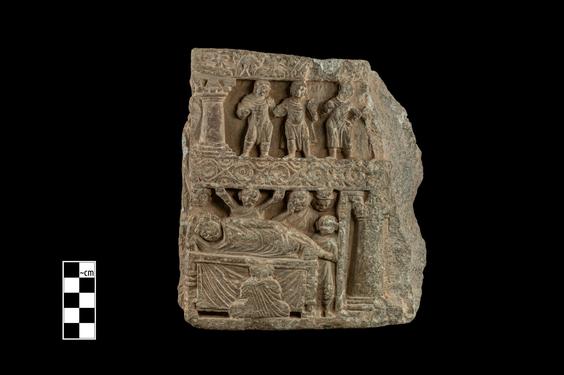
Last Existence: Buddha's Death; male figures

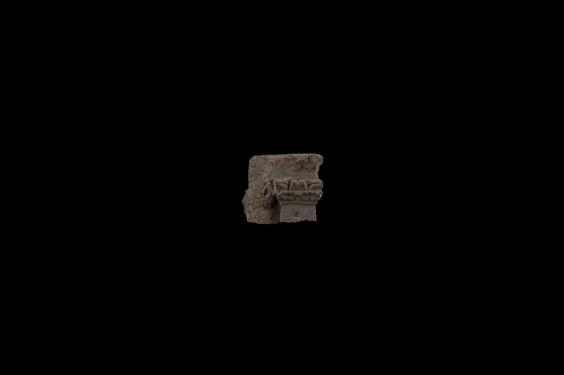
Part of a relief with two superimposed registers, the lower one showing the Buddha's death, the upper male figures. The registers are separated by a row of rosettes within filletted lozenges and half-rosettes in the resulting triangles. The base is plain, the cornice is decorated with a row of acanthus …

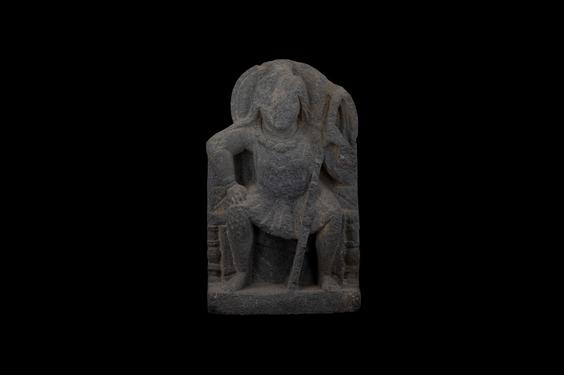
Warrior deity

A projecting figure bracket depicting a warrior male deity. The base consists of a plain fillet. The body of the bracket preserves a vertical socket for wall on both sides. The deity is seated on a coffer-type throne decorated with a crossed motif and turned legs. His right hand is …
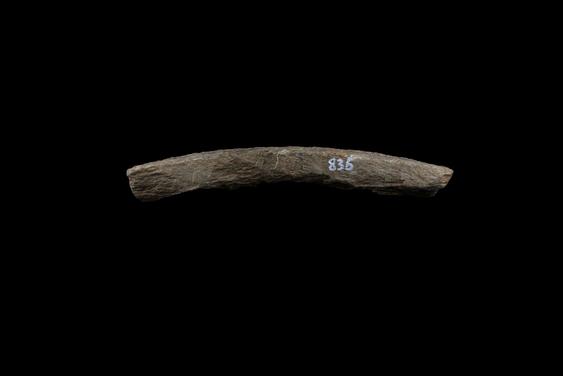
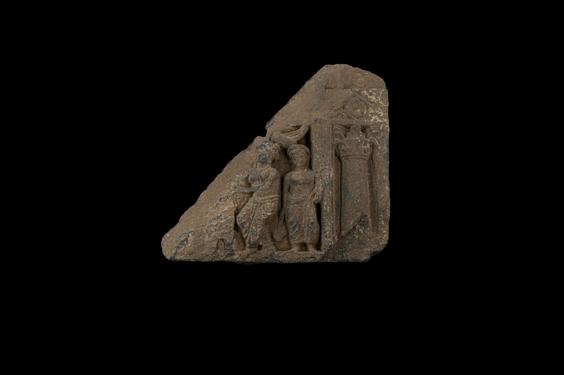
Last Existence: Great Departure

Fragment of a false-niche probably representing the Great Departure. Prince Siddhārtha leaves the palace at night mounting his horse Kaṇṭhaka and accompanied by his loyal charioteer Chandaka. According to Buddhist literary accounts, spirits support the hooves of the horse to prevent noise and wake up Siddhārtha’s family. The lower …
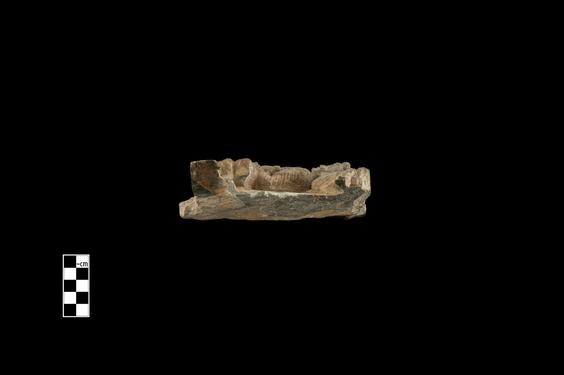
Buddha

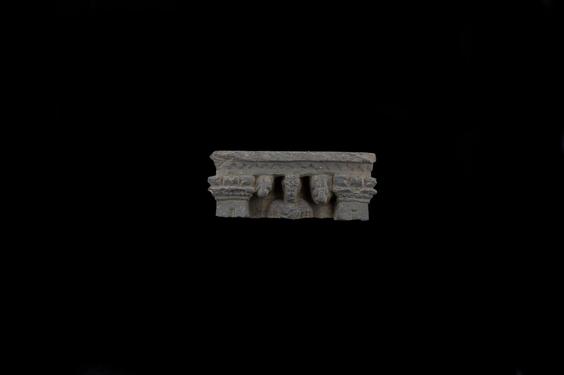
Fragment of a harmikā with the remnants of the vertical through-hole and preserving the half-bust of a buddha sitting between two pillars on one face. The other faces show remains of identical pillars suggesting that the adjacent figurative fields originally bore the same depictions. The cornice is decorated by a …
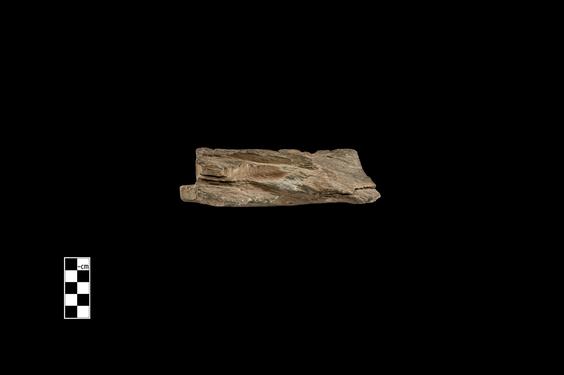
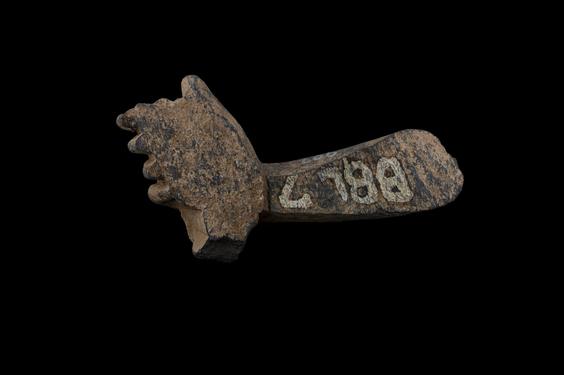
Right hand

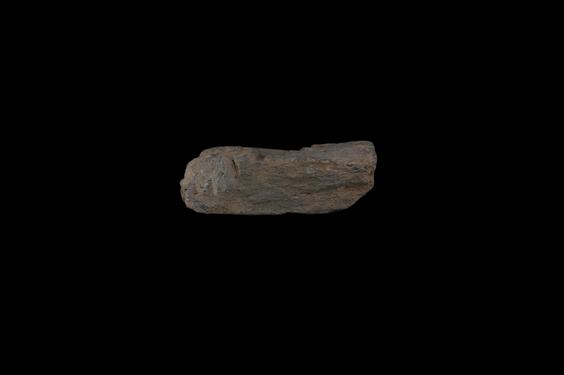
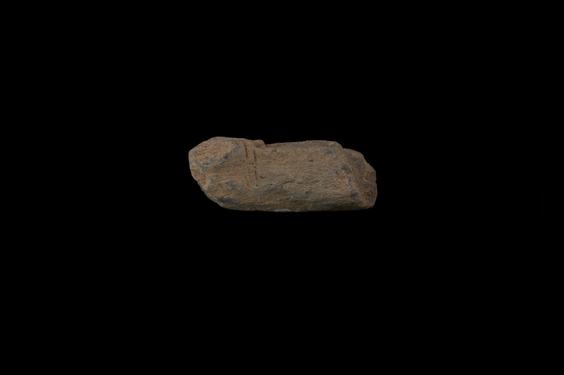
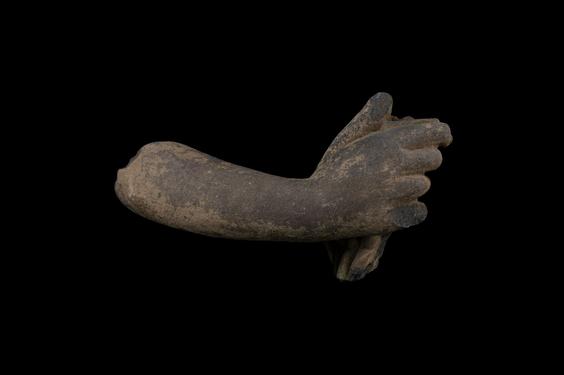
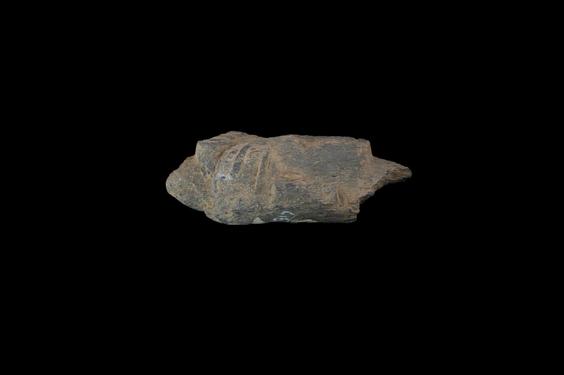
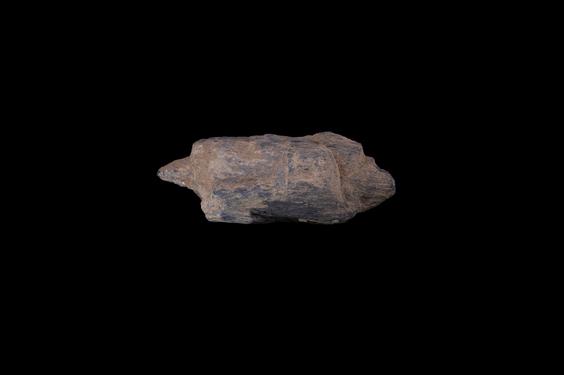
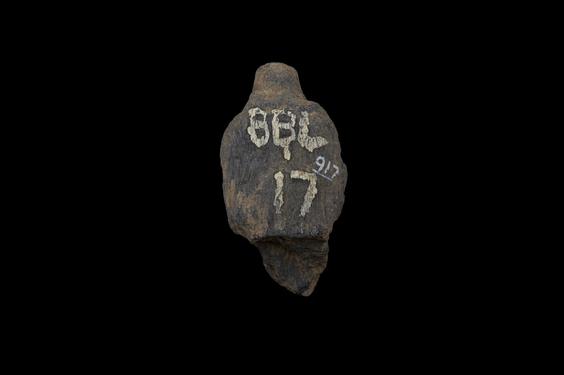
A fragment of the right hand and forearm probably belonging to a Buddha. The hand holds the remnants of the hem of the overrobe.

Last Existence: Buddha's Birth

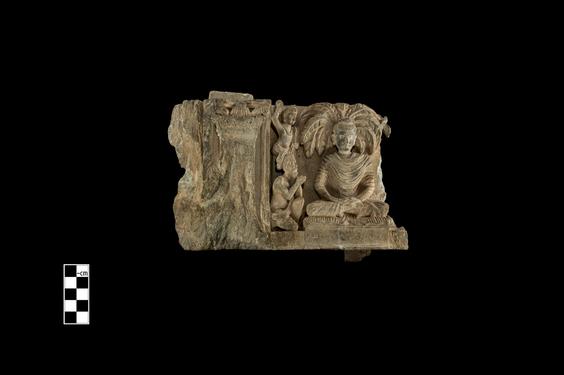
Fragment of a relief depicting the Buddha's birth. In the Lumbinī Park, Māyā gives birth to Siddhārtha holding the branches of a śāla tree. The infant Siddhārtha emerges from the right side. Gods and supernatural beings witness the event. The scene was framed by an encased pilaster of the Gandharan-Corinthian …
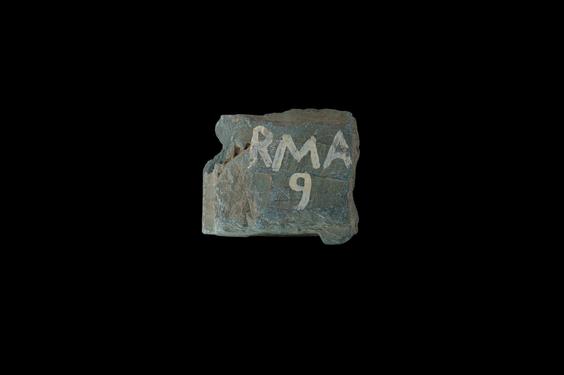
Pāñcika

A stele statue depicting a seated Pāñcika. The base is decorated with a row of adjacent disks between plain fillets. Pāñcika is seated in European position (pralambapadāsana) on a throne with a high back, decorated by a complex lattice of square panels bisected into triangles each containing a smaller triangle …
Male head

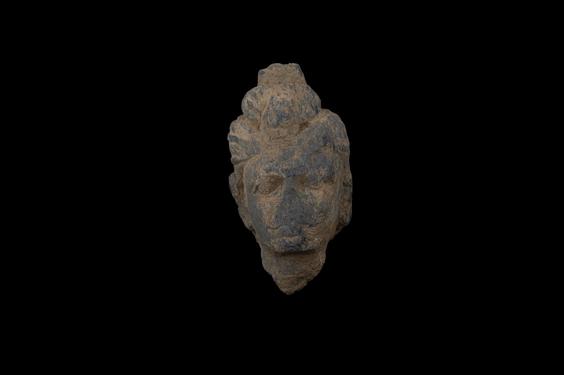
Fragment of a sculpture representing a badly defaced male head with an elaborate headdress. The back of the fragment is flat. The man has large open eyes and an upturned moustache; other facial features are not discernible. He wears a turban with twisted horizontal bands and an elaborate crest (fantail …

Last Existence: Simultaneous Births

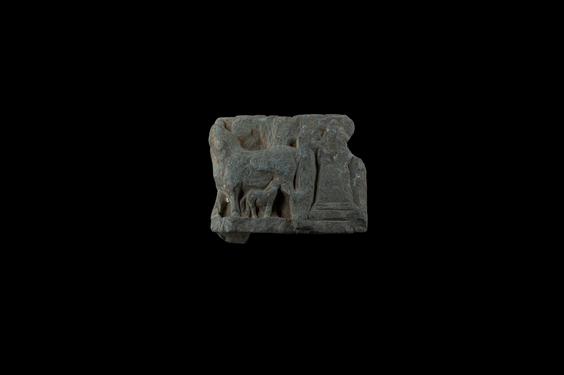
Fragment of frieze relief showing the Simultaneous Births. According to Buddhist textual accounts, Chandaka, Siddhārtha's groom, and Kaṇṭhaka, a marvellous white horse, were born on the same day as Siddhārtha, and became the Bodhisattva’s favourites. The scene was framed by an encased pilaster of the Gandharan-Corinthian type of which …

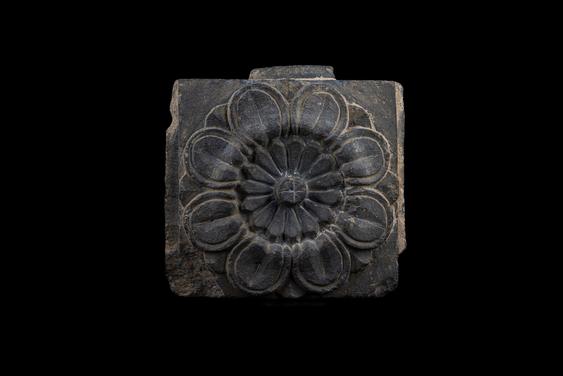
Rosettes

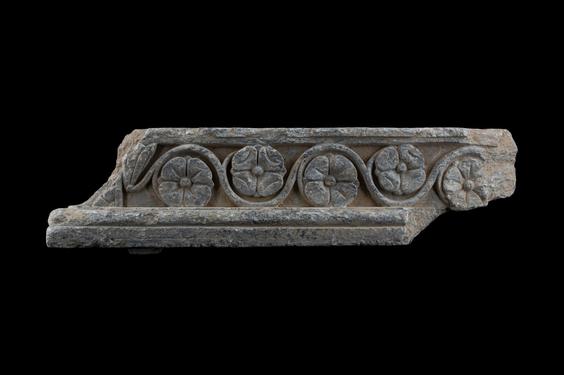
Part of a figured cornice. The base consists of a plain fillet and an ovolo, the cornice of a plain fillet. The figurative field shows a scroll of rosettes with four petals on the right-angle axes and alternating mid-rib. The outline of a framed rosette is visible on the left …

Male protome

Fragment of a false-bracket with a male protome. The figure emerges from a tuft of acanthus leaves and is set against a volute joining the back of his head set against a nimbus. The figure has a mustache and wears an elaborate turban with a crest, large earrings, and a …